· Prismiq Pro · Insights · 8 min read
Turn Raw Footage Into a Rough Cut, Automatically
Wow, I think I’m going to be able to start making videos again.
James, YouTube car reviewer
You know the feeling. You filmed something great, and now comes the dread: hours of scrubbing, trimming, arranging, and hoping it all makes sense.
We have been there too. So we built a video editor that turns your raw footage into a rough cut automatically, giving creators their time back to focus on storytelling instead of files, clips, and timelines. This is the story of the first version, and a clear account of what it could already do.
It began with Instagram, the spark
Michael and I had been building photo and video tools for years, and one pattern kept nagging at us: storage is cheap, cameras are everywhere, and creators are drowning in media. Terabytes of videos, photos, and graphics, with no good way to make sense of it all.
So we started with photos. The idea was simple: dump your shots in, and the system curates candidates for your Instagram wall. It learns your style, keeps the curation on brand, and helps you tell a coherent visual story.
To do that well, the system had to genuinely understand the story being told. What is unique about this creator? What is their voice? What are the photographic attributes, and how do they sequence the progression of a visual story, so each image reinforces the aesthetic of that creator and their brand?
Once we went down that path, the aha moment hit: this approach would be even more powerful for long-form video.
The pivot that changed everything
Video is exponentially harder. A single 15-minute video can carry hundreds of cuts: multiple takes, flubbed lines, and hours of footage to sort through.
The tools have not fundamentally changed since Avid introduced the non-linear editor in 1989. It is still the same workflow: manually find, scrub, cut, sequence. Even modern tools like CapCut focus on effects and templates rather than the core assembly problem.
So we asked: what if we applied the same narrative understanding we had built for photos to this much bigger problem? We pivoted, and built it for YouTube. For creators making content week after week, drowning in footage, spending more time managing timelines than being creative.
What the system actually does
This is the part we want to be precise about, because it is the heart of the technology.
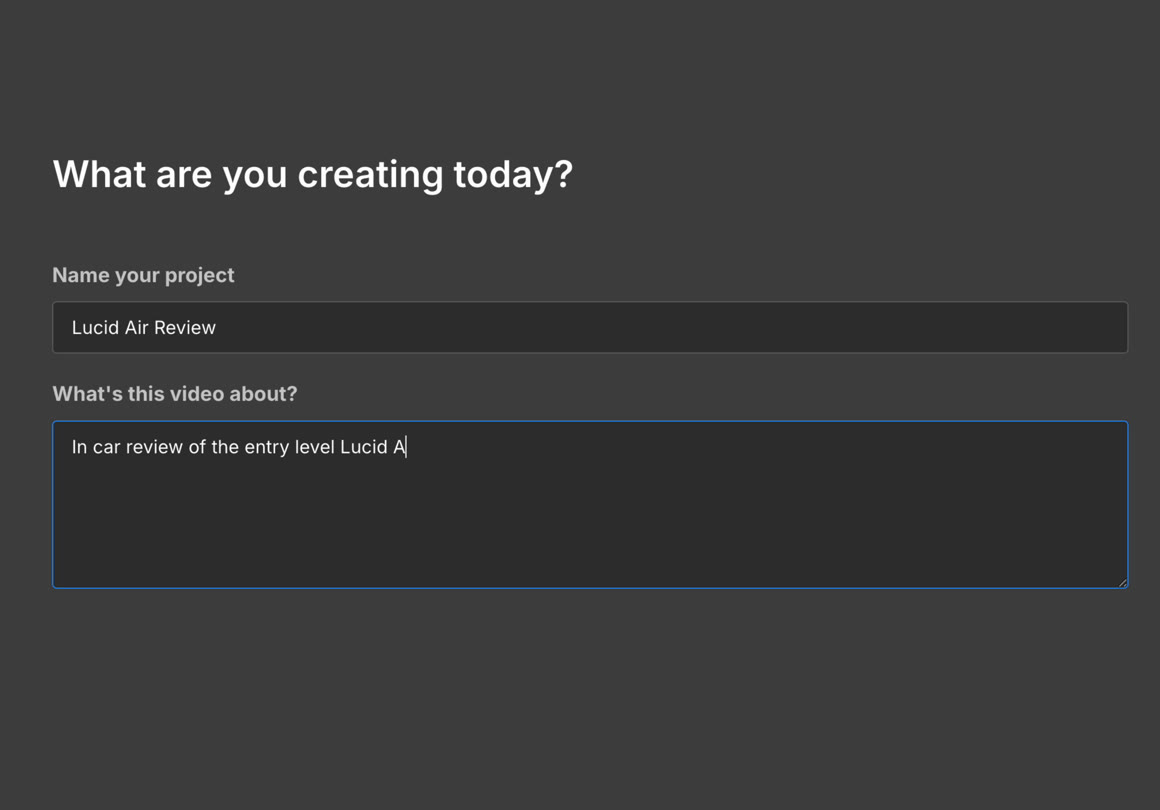
It learns your structure from your idea. Tell Prismiq what you are making, or point it at a reference or a script, and it generates a chapter structure for the video: how it opens, the beats it should hit, and how it sequences them.
It understands scenes, not just clips. The system breaks a project into chapters, segments, and scenes, and describes each one in rich detail: the dialogue, the camera (duration, shot type, cinematography, composition), and the scene itself (setting, subject, subject gaze, and the key elements in frame). That is a machine reading a video the way a director reads a shot list.
It transcribes and understands your footage. Upload your raw material and it transcribes every clip, identifies duplicate takes, recognizes your coverage, and knows which shots can stand in for which moments.
You edit by the words, not the timeline. This is the part most editors have never had. Your footage becomes an editable transcript: every spoken word is a token you can cut, keep, or rearrange, and the video follows. Highlight a keyword to find every place you said it, and navigate the entire edit by the script instead of scrubbing a timeline.
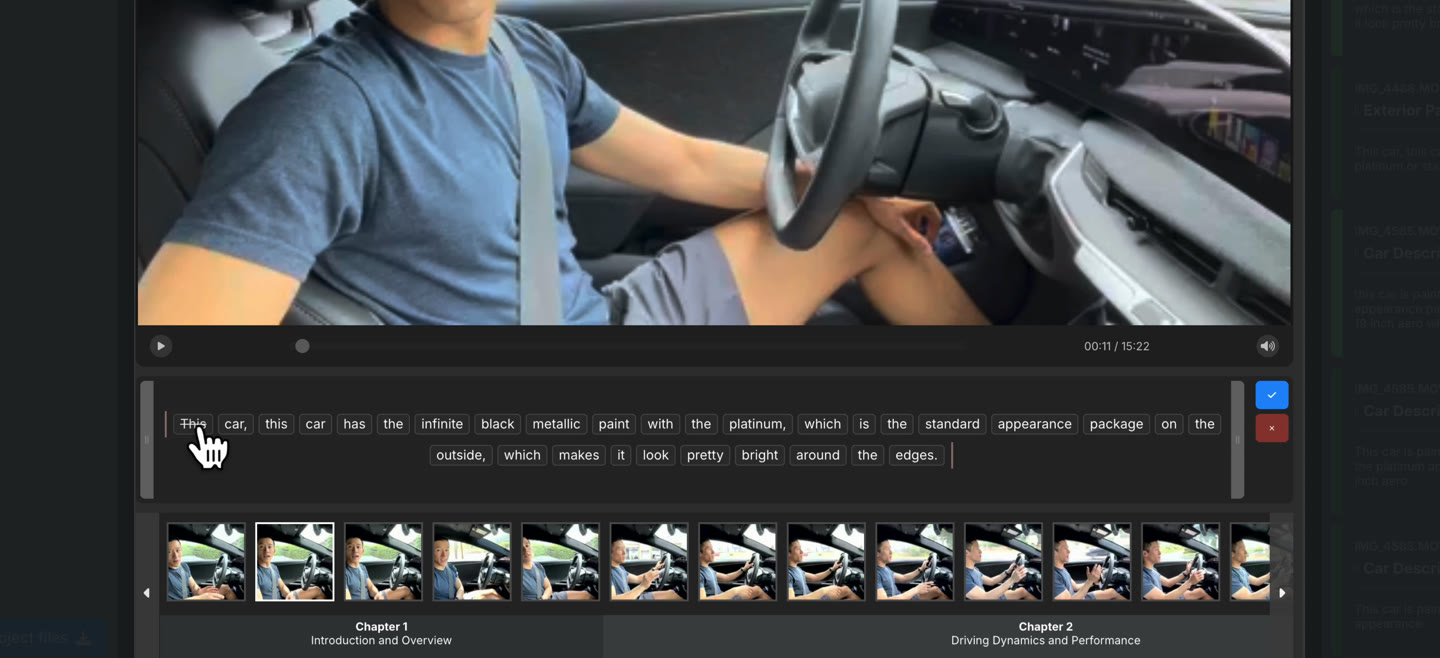
It assembles the cut. The system matches your footage to the structure and builds a rough cut automatically, to a target duration you set. You keep control: make quick tweaks, and swap in any of the synchronized takes with a click.
It hands off cleanly to the pros. When you are ready, export an EDL/XML and a shot list. Load it into Premiere, DaVinci Resolve, or Final Cut and continue your normal workflow, with every one of your real clips already in place.
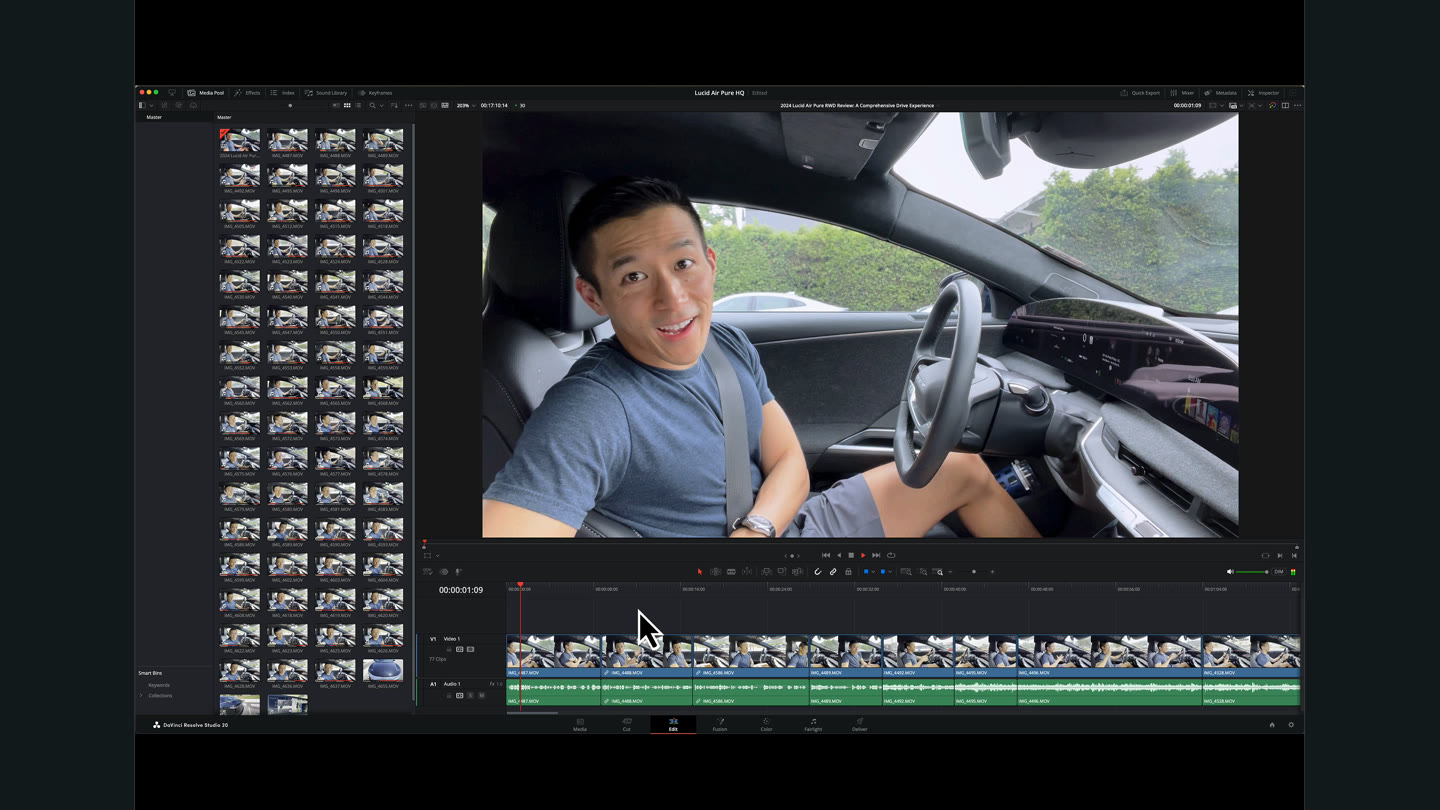
We did not set out to replace your editor. We built the accelerator that gets you 75% of the way there in minutes instead of hours. Right now the focus is spoken narrative: A-roll content where there is a lot of talking, because that is where the most tedious work happens.
The test that proved it could work
Our first creator, James, does car reviews on YouTube. A side hustle, posting about once a month. He films himself talking in the car, walking around the vehicle, explaining features: classic A-roll heavy content.
Then he became a father, and the posts stopped. Not because he did not want to create, but because he no longer had time to edit.
He gave us footage from a couple of shoots. One was a video he had already finished, so we could see whether we could recreate his edit. The other was raw material sitting untouched on his hard drive, filmed while his baby slept in the car seat, never edited. New parent, no time.
We loaded both into Prismiq. The system analyzed everything, identified the duplicate takes, worked out the narrative structure, and assembled two videos, each running over 15 minutes.
We sat down and pressed play. And they were good.
Not perfect. The timing was off by a second or two here and there, and a few moments would benefit from different sequencing. But for having done nothing except feed in the footage, it made sense. It told the story. It worked. James said the changes he would make would be minimal.
Then came the moment we knew we were onto something:
Wow, I think I’m going to be able to start making videos again.
That is what this is really about. Not just faster editing, but giving creators more time to create.
Who we are, and who we are not
We will be honest about who we are. We are developers. We have built video and photo tools for years, and one of us worked as an assistant editor on feature films long ago. We know the craft, and we understand the process.
We make videos ourselves too, side projects and experiments. But we are not running channels with weekly uploads, and we are not influencer personalities. We are developers who love the craft of videography and photography, feel the pain of post-production, and have the expertise to build a next-generation way through it.
That is our angle: use what we know best, building systems, to fix what frustrates everyone most, the endless grind of timeline and media management.
How it works, in a nutshell
- Tell Prismiq what you are making. Describe the video, or point it at a reference or a script, and it generates the structure.
- Upload your raw footage. Prismiq figures out which takes are duplicates and understands your coverage.
- Get your assembly cut. The system matches your footage to the narrative structure and assembles it intelligently.
- Make quick tweaks. Swap in any of the synchronized takes, edit the timeline by the word.
- Export as EDL/XML. Load it into Premiere, Resolve, or Final Cut and continue your normal workflow.
What is ready, and what is not
We are calling this alpha for a reason.
What works now:
- Assembly cuts for A-roll heavy content
- Smart take selection from multiple attempts
- Narrative structure learning from example videos
- Native, word-based timeline edits and content swapping
- Export to your professional editor via EDL/XML
What is coming next:
- A B-roll insert track that clusters supporting visuals around your narrative
- Even smarter scene understanding
- More control over pacing and style
We are being upfront because we want to build it right, and that means building it with you, not for you.
We are looking for 50 co-creators
Not just testers. People who will help shape what Prismiq becomes. If you make A-roll heavy content (talking head, commentary, reviews, tutorials), spend six or more hours editing videos you wish took two, and have stories to tell but limited time to tell them, we want to work with you.
This is early. This is raw. And this is your chance to directly influence what we build next.
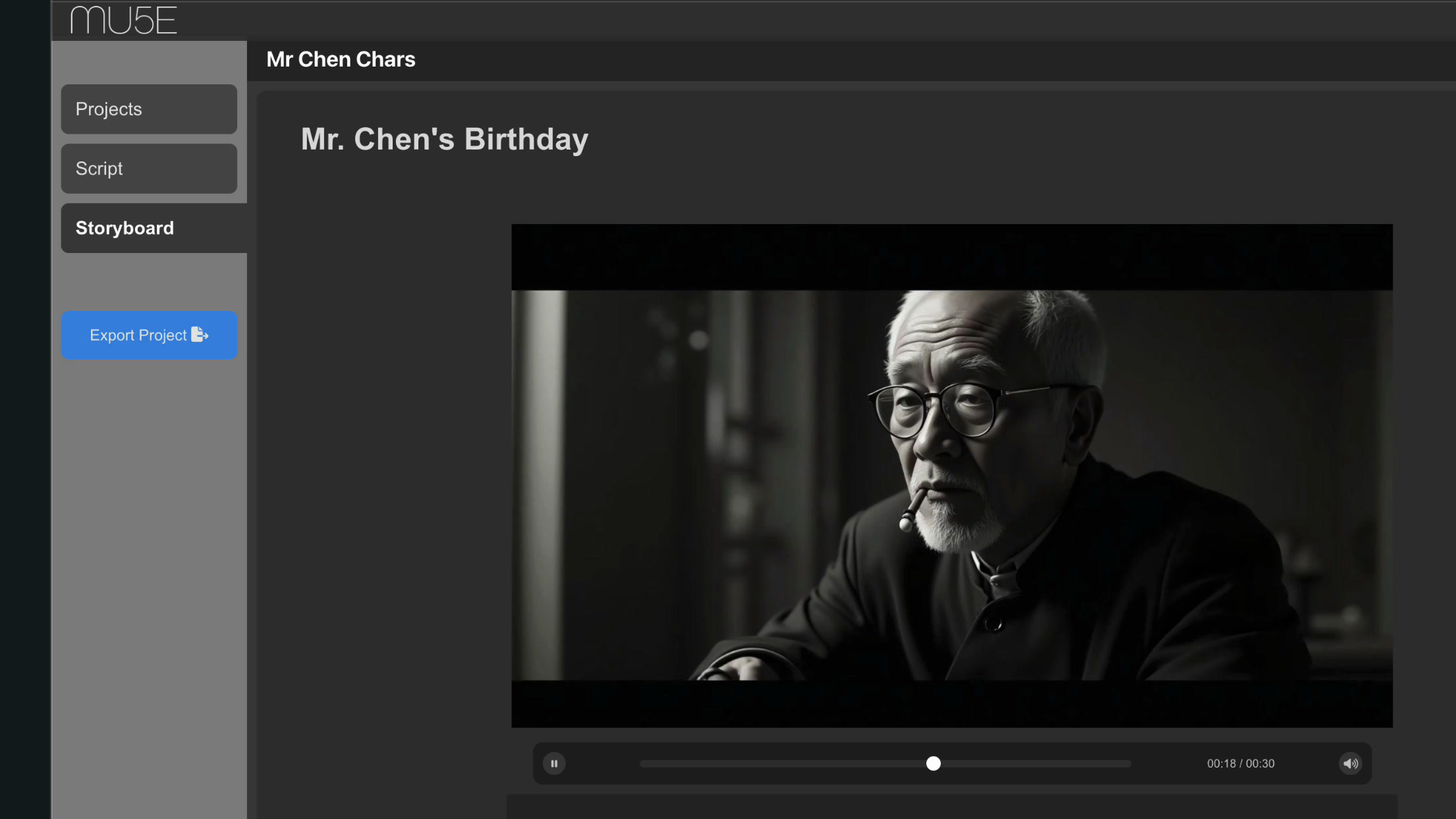
This is the half that assembles what you shot. For the other half, the part that plans and storyboards a video before you film it, read about Muse.
Built by developers who get it, for creators who deserve better.
Robert & Michael